7 Key Pros and Cons of Buying Furniture Online vs. In-Store—With Visualization Strategies for Fewer Regrets

TL;DR
Buying furniture online offers broader selection and visualization tools, while in-store shopping allows direct interaction and immediate feedback. Understanding each method’s trade-offs—especially their impact on fit, comfort, and after-sales support—reduces costly mistakes. Visual preview tools help bridge uncertainty so you buy with greater confidence.
Approaching the Online vs. In-Store Furniture Decision
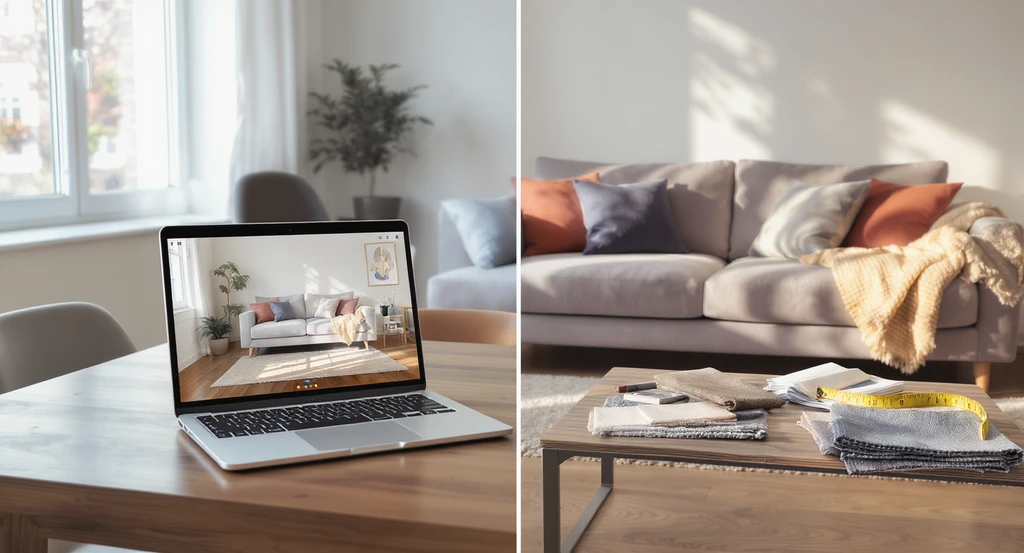
Comparing the best way to visualize furniture online and in-store: digital AR tools versus physical samples help you picture furniture in your room, overcome aphantasia challenges, and make confident home renovation decisions.
Choosing between buying furniture online or in-store is a significant commitment both financially and for how your space lives every day. The best method depends on your priorities: convenience and selection, or tactile certainty and immediate feedback. Importantly, visual uncertainty remains the top source of regret for both channels. This article lays out a structured spatial reasoning approach to help you weigh purchase risks, reduce doubt, and decide how to leverage visualization technology and in-person experience for a confident outcome. Whether you’re working within a budget, have limited delivery options, or just want the right fit the first time, clarity comes from understanding the specifics before buying.
-
01. Online Shopping Increases Selection but Adds Sizing Uncertainty
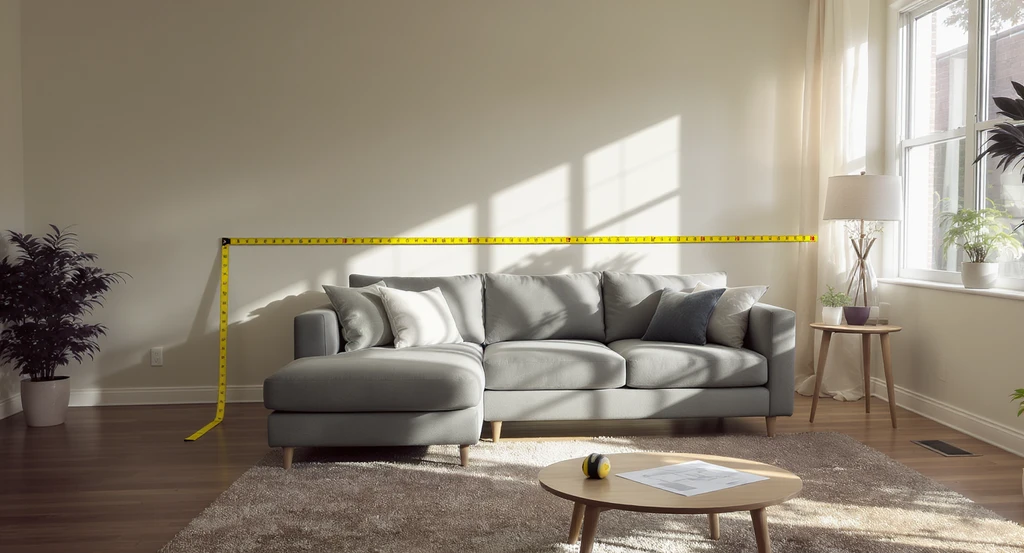
Using digital tools and virtual previews is the best way to visualize furniture online, helping overcome aphantasia challenges in interior design, prevent sizing mistakes, and boost confidence when picturing furniture in your room.
Online furniture vendors offer access to a far larger inventory than most local stores, enabling more granular comparisons and potential price savings. However, a common consequence is increased uncertainty around actual scale and fit. According to our guide on how sofa size and room layout interact, visuals can be misleading if not accompanied by measurable tools or room previews. The increased choice can create overwhelm, and misjudging size is a leading cause of dissatisfaction after delivery. For most homeowners, confusion about whether an item will crowd walkways or overpower a space leads to avoidable returns and increased costs for shipping or restocking. Prioritizing precise measurements and virtual previews is critical to reducing regret probability.
Expert Insight
After impulsively ordering a sofa online, a first-time homeowner realized the piece entirely blocked their entryway—despite loving its style on screen. Only after using a photo-based preview tool did they understand how much space would be lost, illustrating the importance of visualization in avoiding costly mistakes.
-
02. Physical Interaction Remains the Most Reliable Comfort Test
Touching, sitting on, and moving furniture in a showroom remains the only way to validate actual comfort, material texture, and build quality before purchase. This spatial feedback is irreplaceable for buyers sensitive to ergonomics or those with aphantasia who struggle to picture their space. Store visits also provide sensory information-fabric feel, cushion firmness, and perceived weight—that even advanced visualization tools cannot replicate. For high-use items such as sofas or beds, the ability to perform these physical tests often outweighs the convenience of remote shopping, especially when return shipping is costly or logistically complex.
-
03. Visualization Tools Help Bridge Confidence Gaps in Online Shopping
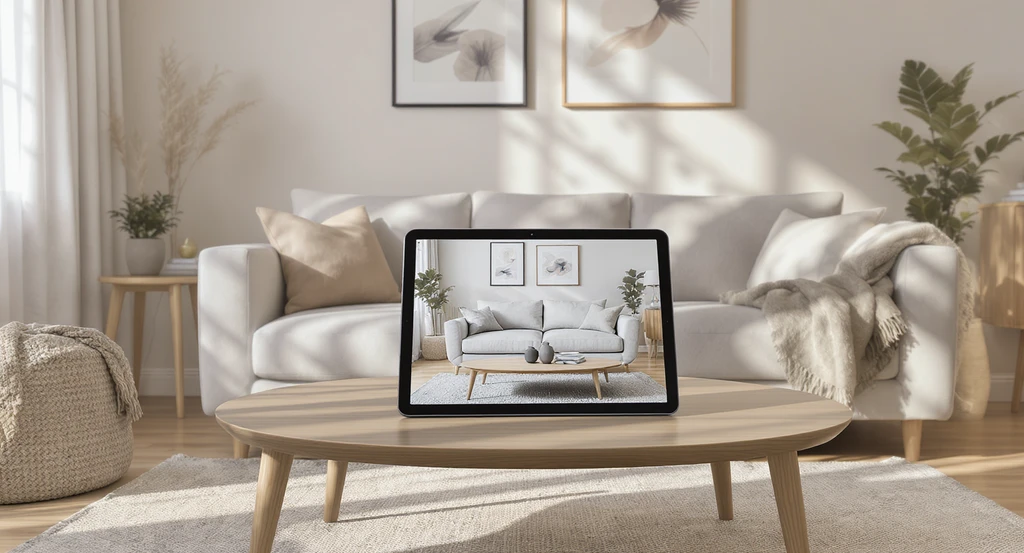
A realistic AR preview on a tablet lets you visualize furniture in your room and compare options—an essential tool for overcoming aphantasia challenges, boosting confidence, and making better online furniture decisions.
Using realistic preview tools online like augmented reality (AR) or photo-based staging can turn digital browsing into outcome-driven decision making. The Spatial Validation System™ employed by platforms such as ReimagineHome lets you see a specific item in a photo of your room, assess scale, and adjust placement virtually before purchase. Visualization reduces the chance of buyer’s remorse by surfacing issues with traffic flow, color harmony, or conflicts with existing pieces, contributing to better purchase satisfaction. As shown in our discussion of testing layouts online before shopping, previewing furniture in your exact space increases action readiness and slashes the risk of costly mistakes.
-
04. Immediate Gratification and Post-Sale Support Favor In-Store Shoppers
Buying in person often allows same-day pickup or access to comprehensive delivery and setup services, such as white glove installation—benefits less common when shopping online. Immediate resolution of issues or expert guidance also reduces post-sale friction, providing real-time support that’s hard to replicate virtually. This hands-on service becomes especially critical when handling oversized or delicate pieces that require specific placement or assembly skills. However, quicker gratification and high-touch service often come with higher sticker prices or limited selection—requiring careful investment of both time and budget.
-
05. Budget Sensitivity Requires Careful Channel Selection
While online pricing is typically more competitive due to less overhead, factoring in shipping, potential return fees, and the lack of in-person inspection may erode savings. Budget-conscious buyers must weigh the risk of receiving an ill-fitting or visually mismatched item against the potential for lower costs. In-store purchases may command a premium, but they minimize costly mistakes and make refunds or service easier to secure. As highlighted in our furniture size and style guide, relying on measurable assessments—not just aesthetics or price—protects value, especially for primary-use furniture.
-
06. Trade-Offs: Supply, Service, and Decision Anxiety
Online retailers can overwhelm buyers with endless options, but lack tactile reassurance and reliable after-sales support. In contrast, showrooms offer certainty and support, but their selection can be constrained by floor space and regional supply chains—a dynamic made clear in our comparison of how furniture size and room planning affect peace of mind. Homeowners often believe more choice equals better outcomes, but in practice, decision fatigue and increased uncertainty can actually heighten anxiety and slow action. If you’re susceptible to overthinking, test driving in person or using robust visualization tools online reduces hesitation and gives validation before spending.
-
07. Visual Validation Reduces Regret—Whichever Path You Choose
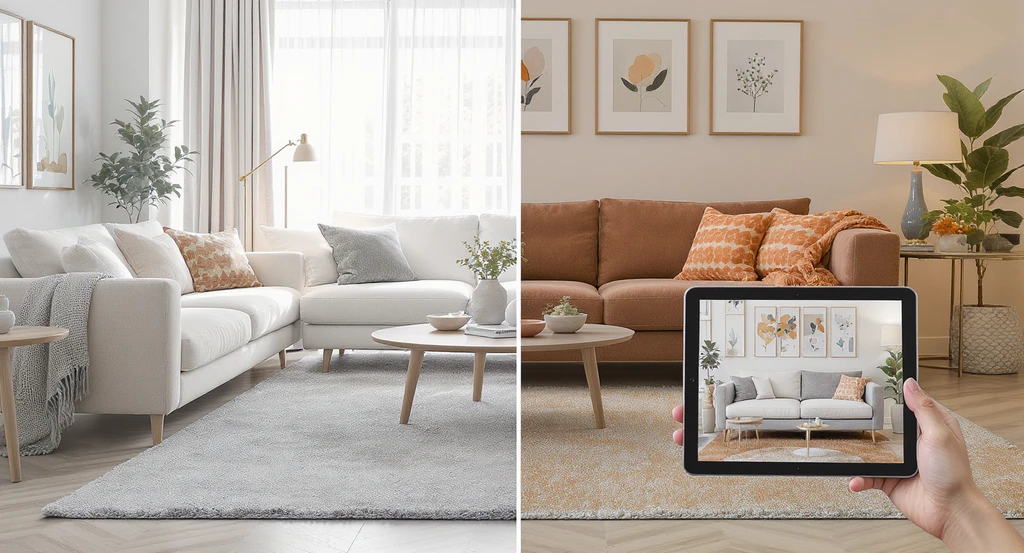
Using AR furniture previews and physical samples side by side shows the best way to visualize furniture online and in-store, helping overcome aphantasia challenges with interior design and improving purchase confidence by accurately comparing online and in-store furniture visualization methods.
Previewing furniture in your actual space, whether via AR, photo upload, or physical showroom samples, clarifies uncertainties in scale, color, and placement. Visual validation accelerates decision readiness, helping you commit with the knowledge that a piece truly fits—spatially and stylistically—before investing. Uncertainty peaks when buyers can’t picture how an item interacts with ceiling height, available light, or walkway clearances. It changes purchase confidence and long-term satisfaction. Most people assume returns result from product defects, but in practice they more often result from inaccurate spatial visualization or overestimating compatibility. Use visual decision tools to reliably avoid these issues.
Visualization Scenario
Picture browsing an online furniture store and using an app to see a sofa virtually placed in your living room photo. The visualization displays how it relates to existing furniture, wall color, and natural light—highlighting if walkway clearance falls short of the 30-inch rule. This preview clarifies whether the purchase fits your real life, helping you commit with greater certainty.
FAQ: Navigating Furniture Shopping Decisions
Is it better to buy furniture online or in-store?
It depends on your priorities. Online shopping offers broader selection and convenience; in-store shopping enables physical testing and expert service. For high-use pieces, combine virtual preview tools with showroom visits when possible.
Can I accurately visualize furniture online if I have a hard time picturing spaces?
Yes—augmented reality tools and platforms where you upload a photo of your room let you see the piece at scale in your own space, reducing the risk of misjudging fit or aesthetics.
What should I measure before buying furniture online?
Always measure room dimensions, walkway clearances (ensure at least 30 inches), and intended locations. Compare these with both the product's external dimensions and your existing pieces for best results.
How does return policy risk differ between online and in-store buying?
Online returns often require repackaging and shipping fees, while in-store returns may be easier, especially for local purchases. Always review store policy details and consider potential costs before buying.
Conclusion: Combine Visualization with Physical Experience for the Best Outcome
Each shopping channel brings distinct benefits and risks, but neither guarantees a regret-free outcome alone. Pairing online visualization tools with targeted in-person inspections—especially for major purchases—produces the highest confidence and best results. Carefully assess space, budget, service needs, and your tolerance for uncertainty before you buy. When in doubt, preview before committing.