A Homeowner’s Journey: Transforming a Hall with AI-Powered Staging
TL;DR
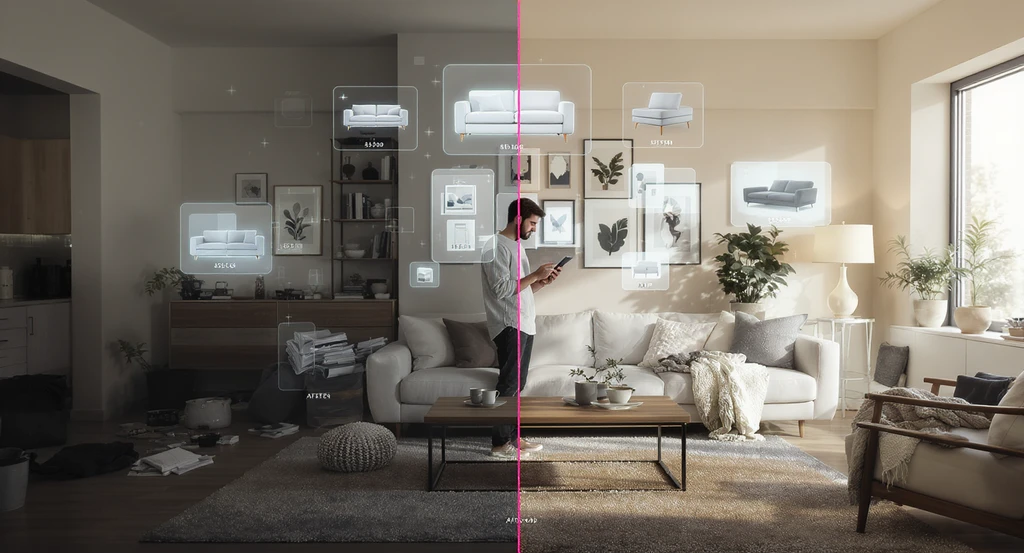
Trace the progression of a homeowner’s design choices while staging a modern open-plan space using real, shoppable products. Each iteration shaped by budget, style preferences, and spatial adjustments is guided by visual comparisons and direct product links, revealing how transparent, data-driven decisions refine the final outcome in digital decorating..
The Real Room: From Blank Slate to Scene-Stealer
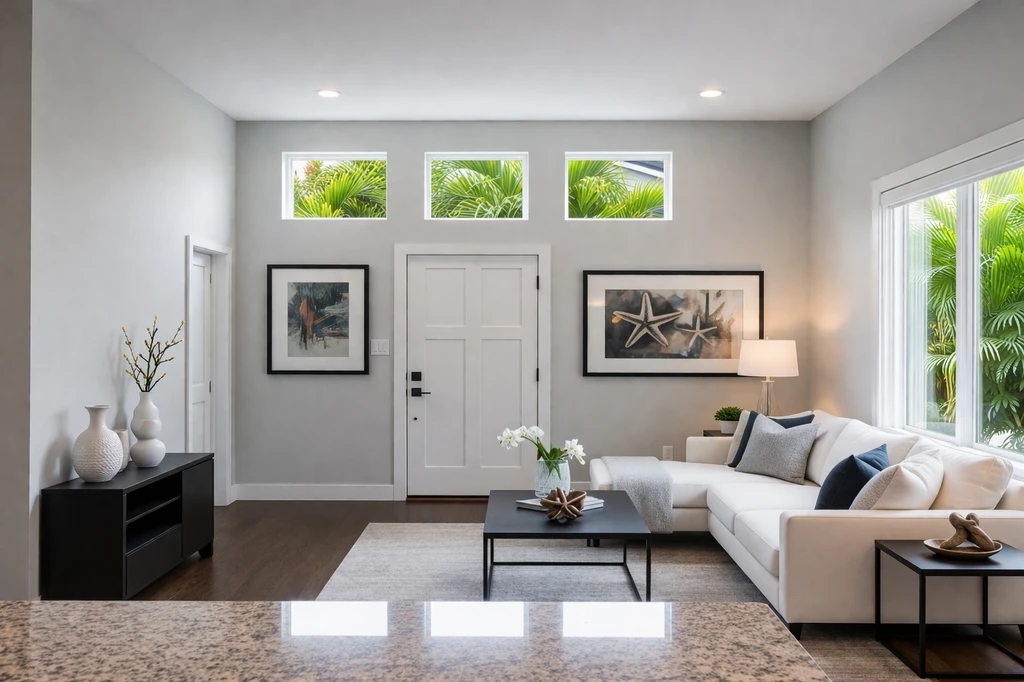
A real-world open-plan living room and kitchen, shown unfurnished, helps visualize furniture fit before buying, addressing why a couch might look different at home and serving as a practical furniture buying guide for small apartments.
There’s nothing hypothetical about this transformation. The homeowner began with a real image of an open-plan living-dining-kitchen space wide, contemporary, but wholly unremarkable without the right furnishings and flow. Their challenge: stage this multi-use room for broad appeal, using only real, purchasable products that could actually be shipped to their preferred ZIP code. The brief was clear but ambitious: everything had to be visually previewed and shoppable, within a specific currency and budget. No guesswork, no wishful styling. This was a session where every decision was traceable, pragmatic, and informed by how the physical room and digital design tools interact especially when the platform in question, REimagineHome, specializes in instant swaps and layout visualization (learn more about AI swap-driven makeovers).
-
Getting Real: The First Pass and the Price of Choice
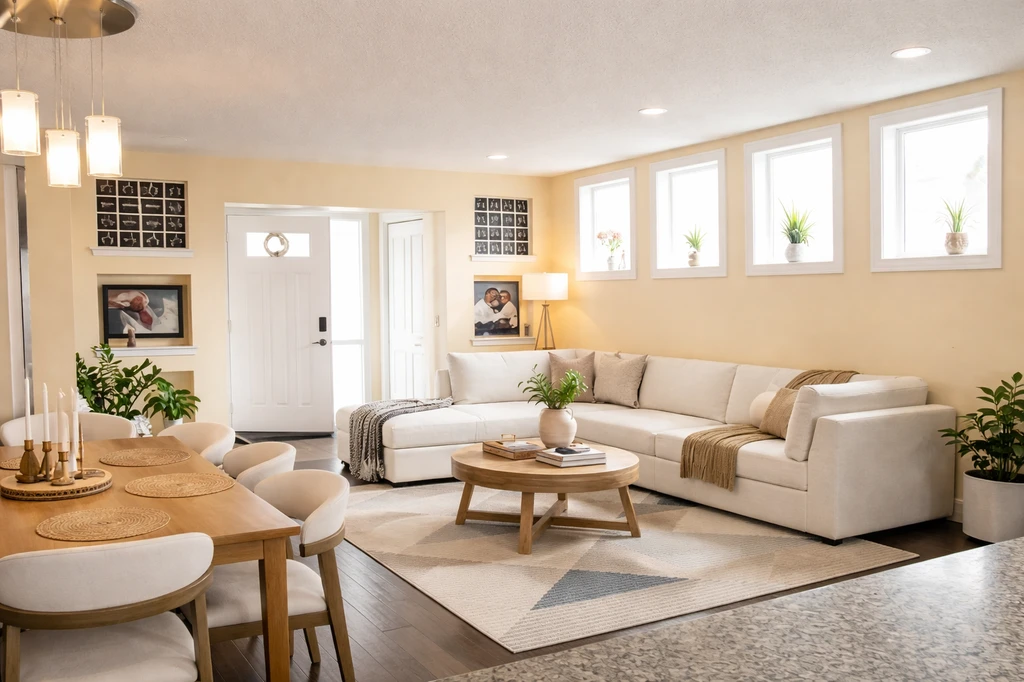
A shoppable living and dining area demonstration reveals how to visualize furniture fit before buying. See the right sectional, coffee table, and rug size for your space—essential tips from a furniture buying guide for small apartments.
The initial dive was all about clarity. With a staging intent and a budget window ($2,000–$6,000 USD) set, the feature for Real Shoppable Products was activated meaning the user would see only actual goods that could be bought immediately, with prices and product links in tow. Early efforts focused on lay-of-the-land moves: the kitchen counters were cleared, the dark feature wall swapped for a warmer, creamier paint, all while preserving the atmospheric lighting. The shopping list became the running scorecard. Big-ticket selections-a neutral L-shaped sectional, a dining set, modern bar stools ,anchored the space, soon followed by cost-smart accents like an area rug and a sculptural coffee table. Here, the first brush with reality: the overall look was cohesive, Every swap in the platform meant a trade-off, visible in real time.
Expert Insight
In the thick of the process, the user paused after a rug replacement—was it right for the light? Too yellow against Shoji White? One quick rotate, a budget nudge, and a new render later, the doubt was settled. It’s these micro-adjustments, invisible in most before/after stories, that form the beating heart of real, user-driven design—detail by shoppable detail.
-
The Budget Shrink, and Hard Choices
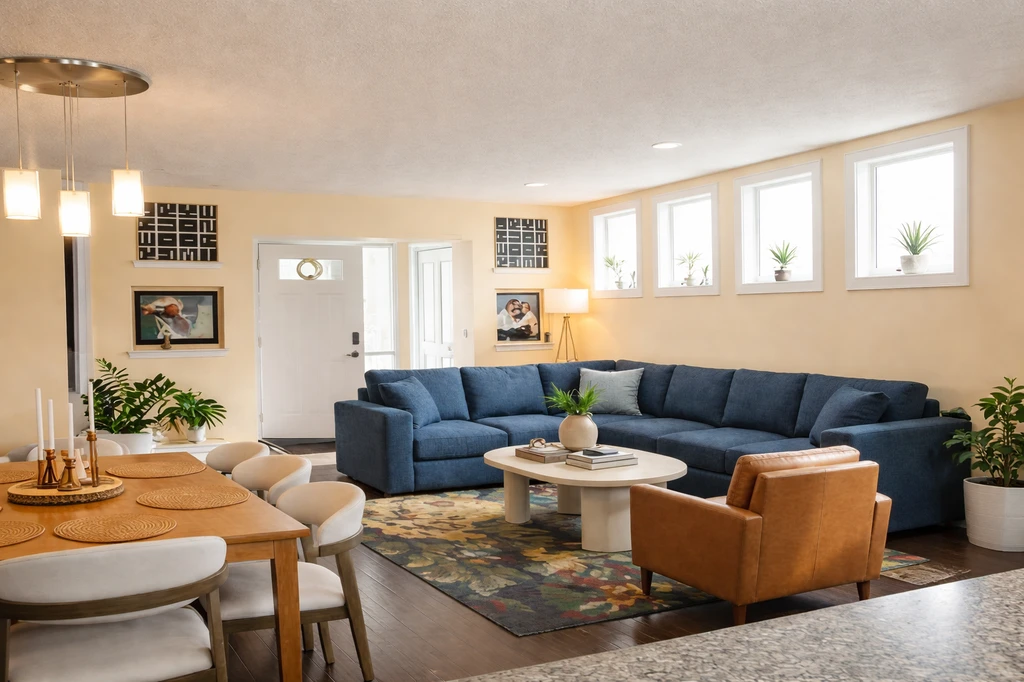
Staging a small apartment on a $2,000–$5,000 budget highlights how to visualize furniture fit before buying and choose the right rug size. This real-world setup demonstrates key tips from a furniture buying guide for small apartments.
Budget constraints weren’t an afterthought -they shaped the project’s backbone. A recalibrated budget ($2,000–$5,000) forced a winnowing. Now, design decisions were governed not just by taste, but by algorithmic access to lower-cost alternatives, and the necessity to prioritize core seating and dining pieces over splurges. Sofas got leaner; accent chairs got swapped for more affordable models. The user’s intent shifted from excess to essentials, echoing our analysis on the dangers of overthinking the finishing touches and the value of seeing every option without commitment. Visual previews made missteps obvious: a rug felt off, or the arrangement lost harmony. Each iteration became a new negotiation between what looked right and what cost less. The budget countdown worked as both pressure and filter shaping decisions in real time.
-
Rotations, Replacements, and the Power of Iteration
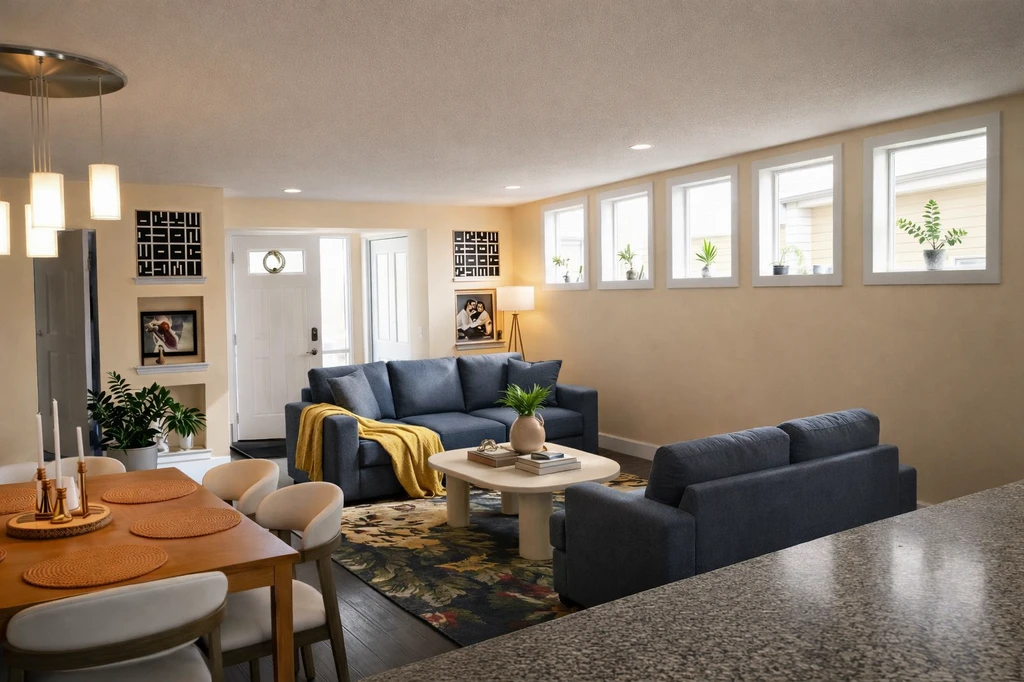
This living room shows how to visualize furniture fit before buying, with a rotated sectional, switched rugs, Shoji White paint, and layered lighting—key steps for using a furniture buying guide for small apartments and solving why a couch looks different at home.
Style, in this session, was never static. The user’s interactions evolved from basic swaps to nuanced instructions: rotate the sectional; shift furnishings to one wall; switch the rug; repaint in "Shoji White"; add portable, warm lighting. Each refinement was met with another photoreal update. The ability to preview these moves before committing is exactly the premise explored in our investigation of AI-trusted room simulations. Shopping lists, unchanged except by explicit direction, maintained transparency. Every product swap brought a new link, a new line item, and crucially a new opportunity to visualize and compare. The platform’s neutrality meant choices weren’t biased toward brands or commissions; only user intent and constraints dictated the result. The decision-maker toggled between color ways, adjusted seat orientation, and tested the relationship between furnishings and natural light. It was interior design by micro-pivot, guided entirely by user feedback.
-
Style as an Endpoint, Not a Starting Point
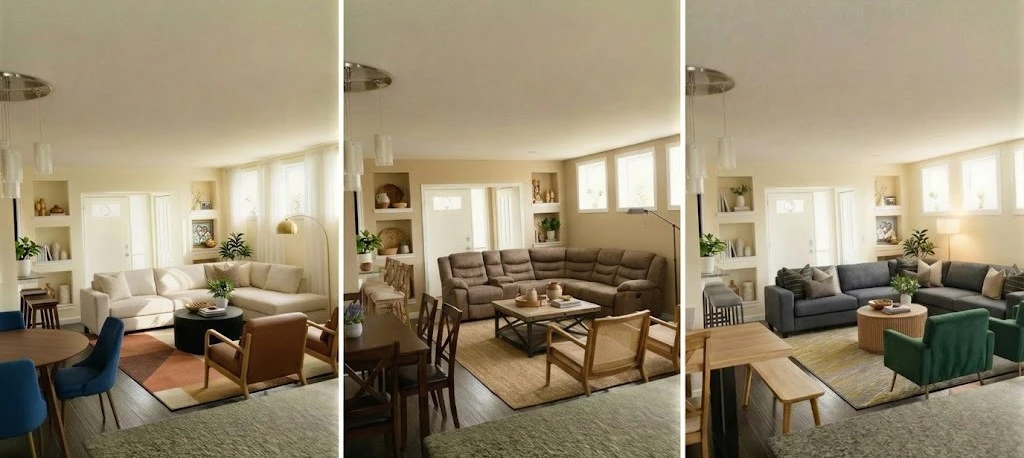
See how to visualize furniture fit before buying and how a sectional sofa or new rug size would look using real-time style layering—an essential furniture buying guide for small apartments.
Throughout the session, style was applied surgically never as an all-at-once theme, but as a gradual layering. The transition from a modern to a Scandinavian, and then to a rustic ambiance, was neither fussy nor formulaic. When the user wanted accents, a simple request led to new soft goods with traceable links. A desire for softness brought sheer curtains; for warmth, more wood and texture. Each new style direction brought a reconfiguration, maintaining budget, proportions, and practicality at the forefront. And as we see in our case study on photoreal instant makeovers, every session like this hinges on direct, visual feedback: not "Do you want rustic?" but "Here it is, as it would actually look in your real space, with a link to buy."
-
The Final Stretch: Layering Details and Living with the Results
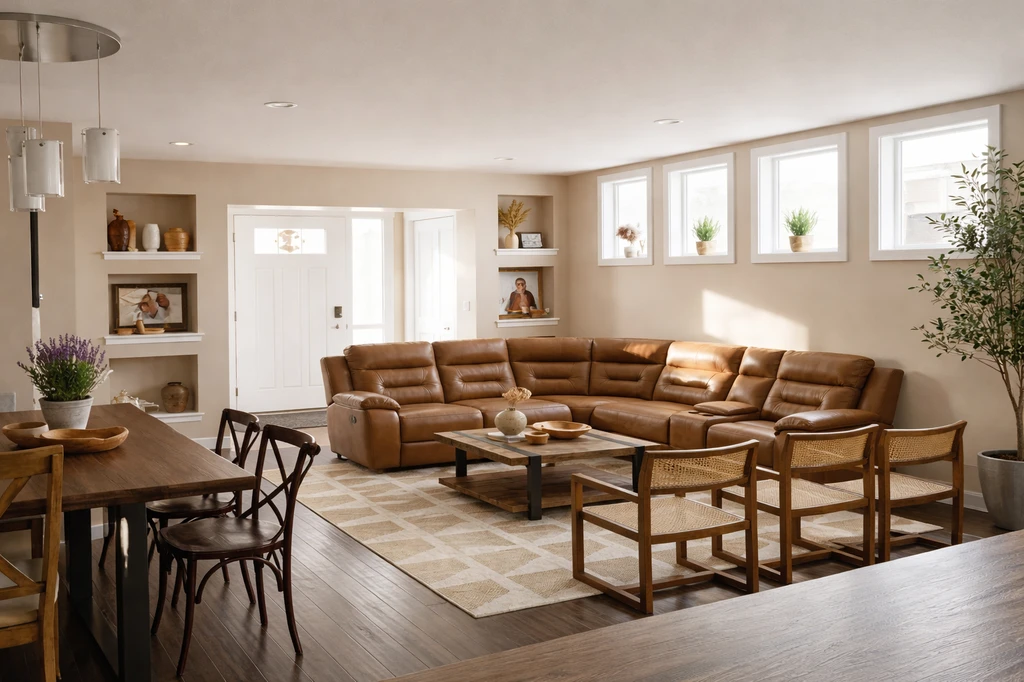
See how to visualize furniture fit before buying: this staged living room shows will a sectional sofa fit in my living room, lighting tweaks, and the impact of choosing the right rug size for your space.
The last iterations show what’s new in DIY design: a user, emboldened by instant revisions, fine-tunes not just layout or color but lighting, textiles, and the feel of the entire ensemble. Adding sheer curtains, shifting from Scandinavian minimalism to rustic warmth, every tweak instantly updates both the render and shopping plan. The walls are repainted, curtains vanish, accents shift from plush to reclaimed. Each final pass is less about chasing a perfect Pinterest board than about harmonizing the real what you see is what you can literally buy, now, for this specific room. Every decision, from sectional orientation to the addition of farmhouse stools or a bronze lamp, is laser-focused on authenticity, transparency, and an unwavering sense that nothing in the room is theoretical. Every choice leaves a digital paper trail a discipline explored again and again in our research on how AI furniture swaps shape real purchase decisions.
FAQ: Real Shoppable Products & User-Led Staging
A: Yes. As shown in this session, products are filtered by ZIP code, currency, and shipping region.
Q: What happens if my budget changes mid-design?
A: The system immediately recalculates options, as seen when the user adjusted their budget—lower-priced alternatives are seamlessly pulled in.
Q: Is there any brand bias or hidden commission?
A: No. The process is fully transparent; as the session demonstrates, only user input and constraints control the final results (see more about commission-free selection).
Q: Can styles and layouts be changed as many times as needed?
A: Absolutely. Iteration is core: from layout rotations to swapping entire décor styles, every change updates the room and the shoppable list instantly.
Q: Do all product links go to real retailers?
A: Yes. Every swap populates a direct-to-shop link, no matter the iteration or how many tweaks are made.
What the Session Reveals: Decision-Making in the Age of Total Transparency
Every micro-decision—budget tweaks, product swaps, layout rotations—was made possible (and visible) by the shoppable toolkit. The session reveals the new normal: users are less interested in being sold a look, and more in testing, customizing, and seeing the exact result before they spend. Trust comes from live comparison. Constraints shape the aesthetic as much as taste. Instead of aiming for some abstract ideal, each step is rooted in the real—real products, real budgets, real space. This approach is the antithesis of the old showroom model, and a testament to the user’s granular, iterative engagement. Here, style emerges through the pressures of price, layout, and true-to-life visuals. Any notion of one-click makeovers gives way to the tension (and delight) of granular, shoppable design—one budget line, product swap, or curtain pull at a time.