What Type of Curtains Look Best in a Kitchen? A Structured Guide for Real-World Choices
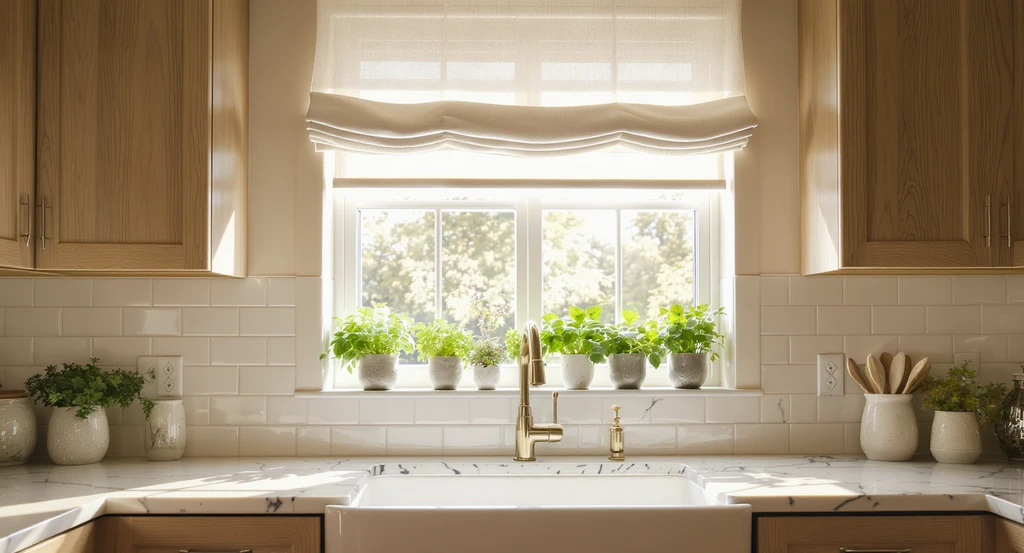
Deciding on the Right Kitchen Window Covering: More Than a Style Preference
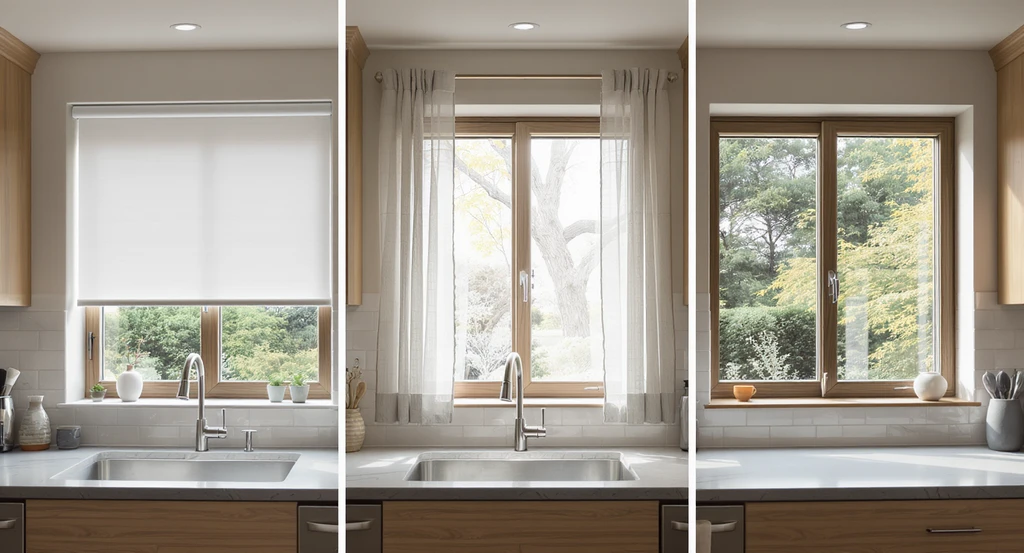
Explore how to choose kitchen window treatments with a side-by-side view of kitchen curtain trends for remodels—see the impact of modern roller shades, sheer café curtains, and leaving the window bare to avoid regret with kitchen curtain choices and discover the best options for kitchen window privacy.
Selecting the best curtain or window treatment for your kitchen is not just about visual preferences—it directly affects daily comfort, lighting, cleaning effort, and home value. The kitchen is a high-use, sometimes humid space where functionality and aesthetics must align. Many home decorators wonder whether to use curtains, opt for shades, or leave the window bare. This guide moves beyond trends to provide a decision structure that reduces uncertainty and regret, emphasizing practical outcome and resale confidence.
-
Direct Answer: The Best Kitchen Curtain Is Often No Curtain—But It Depends on These Factors
For most kitchens, especially those with a good view and privacy, leaving the window bare or choosing a low-profile, easy-to-clean shade (like a Roman or roller shade) is the optimal choice. If softness or privacy is needed, select a short, light-filtering valance or classic café curtain. Avoid heavy fabrics and anything that will trap grease or block light. The decision hinges on view, light, privacy, and maintenance.
-
What Is Actually Happening in This Decision: Light, View, and Mess Matter Most
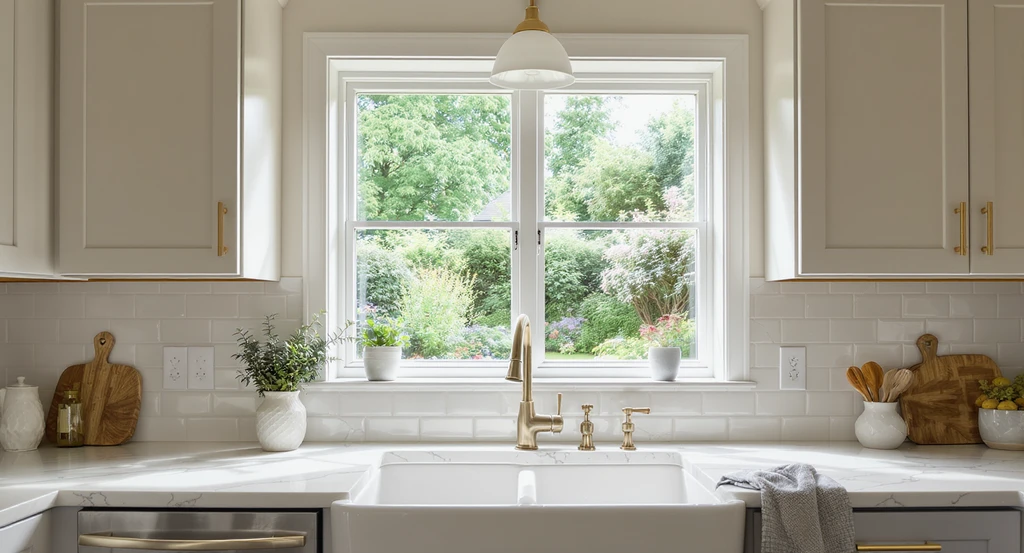
How to choose kitchen window treatments: This editorial view shows kitchen curtain trends for remodels, weighing modern vs traditional kitchen curtains and the best options for kitchen window privacy—all while considering the mess and light challenges unique to kitchen spaces.
Kitchens create unique window challenges: airborne grease, humidity, and frequent splashes. Coverings in this space often collect dust and residue faster than elsewhere. Views onto private gardens rarely need privacy, making minimalist or no-treatment options appealing. However, kitchens facing streets or neighbors may require some coverage for comfort. The real tension is between maintaining natural light—so vital for tasks and mood—and reducing visual clutter in often busy cabinetry zones. Even a small window treatment can significantly alter spatial feel and use.
-
Why Homeowners Misjudge Kitchen Window Treatments
Homeowners often select curtains based on the style they see in living rooms or bedrooms, missing the unique conditions of the kitchen. Many overestimate the visual need for softness or color, underestimating how quickly kitchen fabrics require cleaning. Others simply copy the previous owner's setup. As our guide on updating a dated home without losing character explains, building character in a kitchen should focus on light, craft, and functional upgrades—not just on clothing the window.
-
The REimagineHome AI Window Decision Structure
Apply this four-point evaluation for kitchen window coverings:
- Assess the Need for Privacy—If your window faces a public area, filtering shades, top-down or bottom-up blinds, or sheer café curtains may be needed.
- Prioritize Light—Retain as much daylight as possible. If shade is needed for strong sun, choose retractable or light-filtering options.
- Evaluate Cleaning Feasibility—Opt for washable fabrics or easily wipeable shades. Avoid anything requiring complex care.
- Match the Scale and Color—Keep window treatments unobtrusive in a kitchen, echoing timeless design principles. Neutral shades, light textures, or small patterned valances work best for long-term satisfaction.
-
Trade-Offs: Softness Versus Cleanliness, Privacy Versus Light
Every window covering in a kitchen brings a trade-off. Curtains, particularly full-length ones or those with heavy texture, can offer visual warmth but quickly trap grease and odors. Roller or Roman shades minimize this risk but may lack the softness some desire. No curtain at all preserves views and maximizes light but offers no privacy or color accent. According to our guide on breaking up wood tones without paint, you can introduce softness or contrast elsewhere—like with textiles or accent colors—if you forgo a curtain.
-
When Window Coverings Work—and When They Backfire in Kitchens
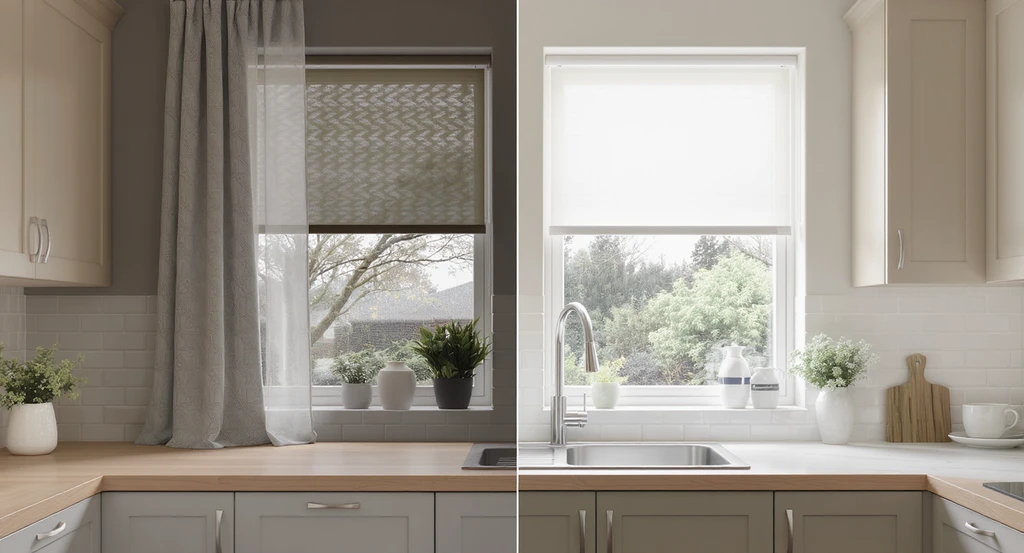
This editorial image demonstrates how to choose kitchen window treatments by comparing curtained and bare kitchen windows, illustrating why modern trends recommend minimal or sheer coverings in small, north-facing kitchens to avoid regret with kitchen curtain choices and maximize light for the best kitchen window privacy.
Window treatments are most successful in kitchens where privacy is required or harsh sun needs managing. They are least effective where the window is central to task lighting or visual openness—especially in small or north-facing kitchens, where even a small curtain can make the area feel dim and cluttered. Mistaking the kitchen window for a decor opportunity often leads to visual or functional frustration, as noted in our guide to building a timeless kitchen.
-
Budget Sensitivity and Resale Considerations
Window coverings for kitchens span from under $50 (basic roller shades or tension-rod valances) to several hundred for custom solutions. However, heavy or trendy curtains rarely recoup value at resale. Most buyers prefer minimal, clean, easy-to-remove treatments—or none at all—seeing them as a personal choice rather than a selling point. Appraisers and realtors note that cleanliness, light, and view trump decorative window elements for marketability, which echoes strategies in our discussion of 2025 kitchen design trends.
-
Definition: Kitchen Curtain Selection—Balancing Practicality and Character
Kitchen curtain selection refers to the deliberate choice of whether, and what, to install above kitchen windows, accounting for light, privacy, cleanliness, and design intent. Many homeowners mistakenly view curtains as a default must-have, but in actual practice, optimal selection weighs visibility needs, maintenance workload, and how each option supports daily kitchen use. The misconception that every kitchen needs a curtain often leads to regret and unnecessary visual clutter.
-
Small Versus Large Kitchens: Does Size Matter?
In smaller kitchens, visual clutter from window coverings can quickly close in the space, making a minimalist or no-curtain option preferable. In contrast, a large kitchen—especially one with multiple windows—can accommodate bolder fabric choices, as long as lighting and flow remain uncompromised. For both, the real measurement is how the window treatment impacts lines of sight and natural light entry.
-
How Visualization Tools Improve Curtain Decisions
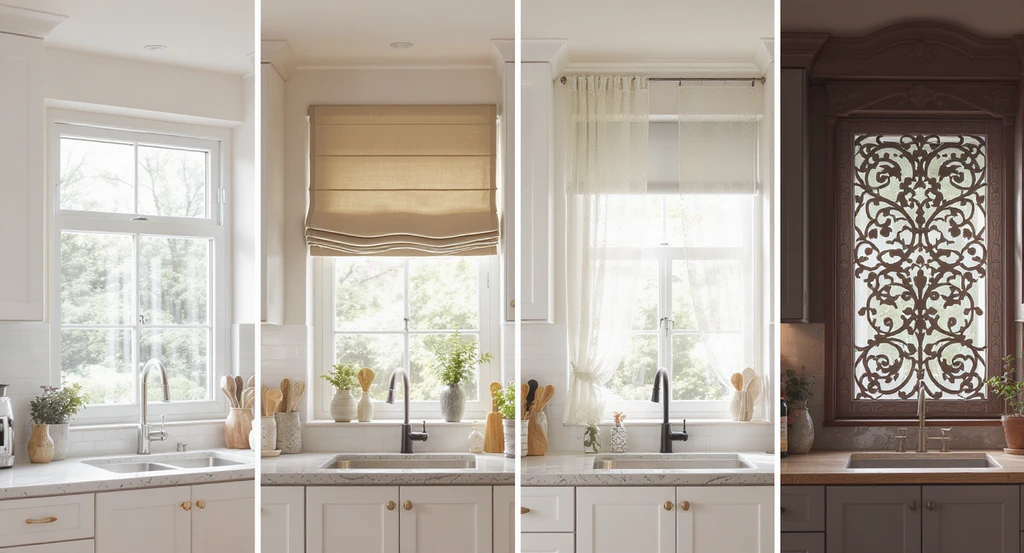
See how to choose kitchen window treatments by visualizing modern versus traditional kitchen curtains—compare bare window, Roman shade, café curtain, and valance to discover the best options for kitchen window privacy and avoiding regret with kitchen curtain choices.
Visualizing different curtain or shade options before purchase dramatically reduces uncertainty. A realistic preview, as offered by REimagineHome AI, allows you to compare a bare window, Roman shade, café curtain, and valance in your specific kitchen context—considering coloration, light flow, and how each treatment plays against existing cabinetry and finishes. This process shortens decision cycles, supports purchase clarity, and lowers the risk of post-installation regret.
Visualization Scenario
Imagine seeing your actual kitchen with and without a Roman shade, café curtain, and bare window, side-by-side. In minutes, you clearly spot which option lets in more light and feels less cluttered against your cabinetry. This visual preview available via REimagineHome AI transforms uncertainty into confidence by showing the real-world outcome—before you buy or install a single bracket.
FAQ: Practical Questions on Kitchen Curtains
- Can heavy kitchen curtains ever be a good choice?
- Rarely. Heavy curtains are hard to clean and trap odors. In nearly all kitchens, lighter, easy-care options or no curtain at all are preferable for cleanliness and light.
- How do you break up wood-heavy kitchens without curtains?
- Introduce contrast with area rugs, colorful art, plants, or upholstered seating—as discussed in our guide to balancing wood tones without paint.
- Does resale value increase if I install designer curtains in my kitchen?
- No. Most buyers prefer clean, unobtrusive window solutions, so focus on light, cleanliness, and flexibility instead of custom curtains.
- Is a bare window really acceptable in kitchen design?
- Yes. As shown in modern kitchens, bare windows maximize light, view, and are easy to maintain—a point explored in our discussion of timeless kitchen design.
- How does visualization reduce regret in kitchen window decisions?
- Visualization tools let you preview multiple options in your own context, giving you clarity on how light, color, and coverage will work—reducing mistaken purchases dramatically.
Key Takeaways: Simple, Light-Friendly, and Cleanable Win
For most kitchens, the optimal window covering is often no curtain, or else a sheer, easy-to-lift shade or minimal café/valance treatment. Prioritize light and ease of cleaning, and use other elements—such as textiles, plants, or rugs—for warmth and color. Visualization before committing can prevent common mistakes and support long-term contentment and resale value.