How do I plan a small dorm room layout?
TL;DR
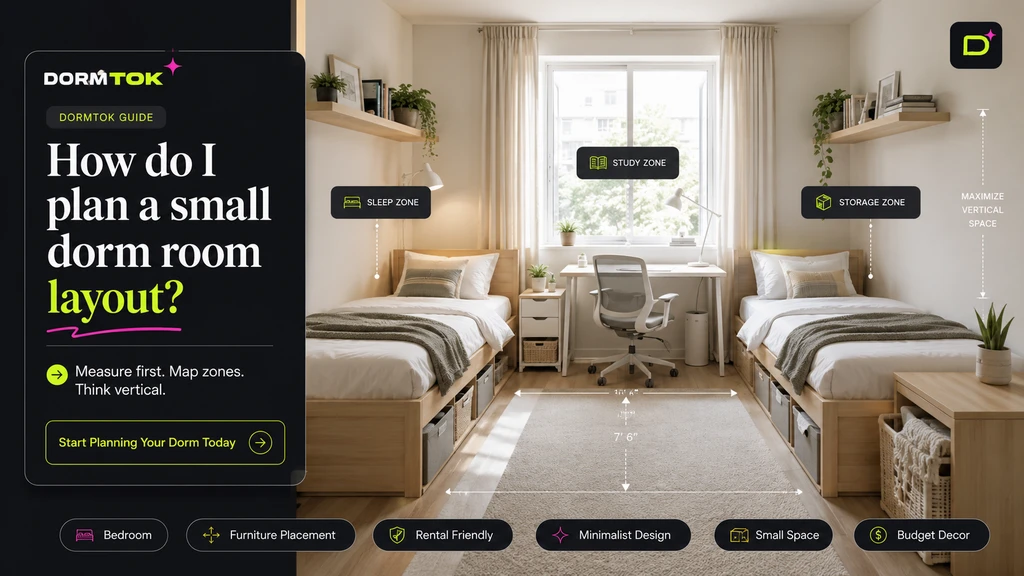
Forget Pinterest-perfect dorms: planning a small dorm layout starts by working with fixed furniture, measuring before you shop, and thinking vertically. Map out zones for sleep, study, and storage, then coordinate with your roommate. The right layout makes even tiny dorms feel bigger, less stressful, and more you.
Why Dorm Layout Matters More Than Dorm Decor
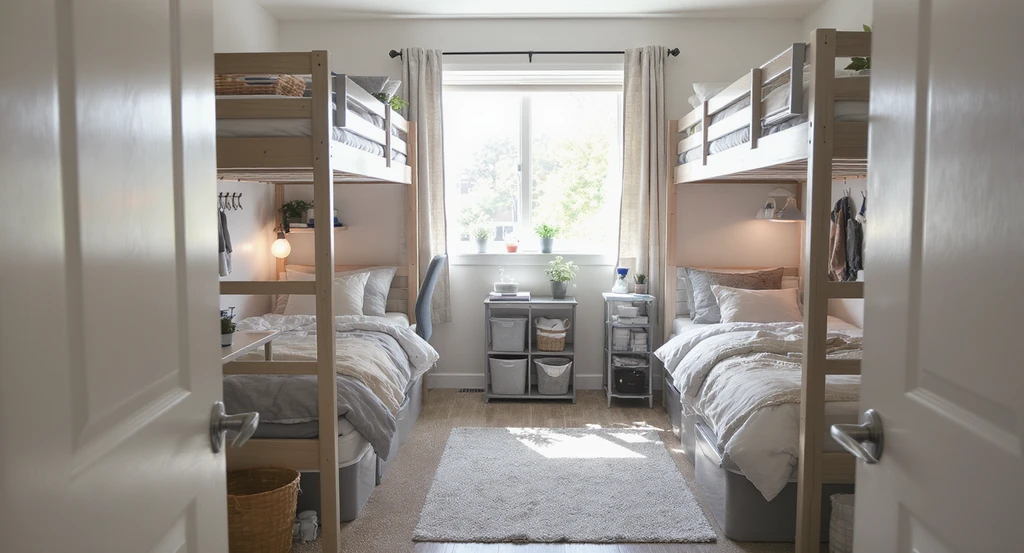
See how to plan a small dorm room layout with the best furniture arrangement, creative storage solutions, and tips for using vertical space in shared college dorms.
Raise your hand if you’ve ever spent hours scrolling dormtok, picking out the *perfect* comforter, only to get to your new dorm and realize… there’s nowhere to actually put half the stuff you bought. You’re not alone. Most people hyper-focus on style and skip right over layout, even though a good floor plan is what makes any small dorm livable.
Real talk: The difference between a dorm that feels crowded and one that feels comfortable isn’t about who has the cutest throw pillows, it’s about how you arrange what you’ve got. As we explored in our guide on dorm room ideas, making smart choices with your space matters way more than what color you paint your nails (or your wall art, if painting were allowed!).
-
1. Start with What You Can’t Move: The Reality of Dorm Furniture
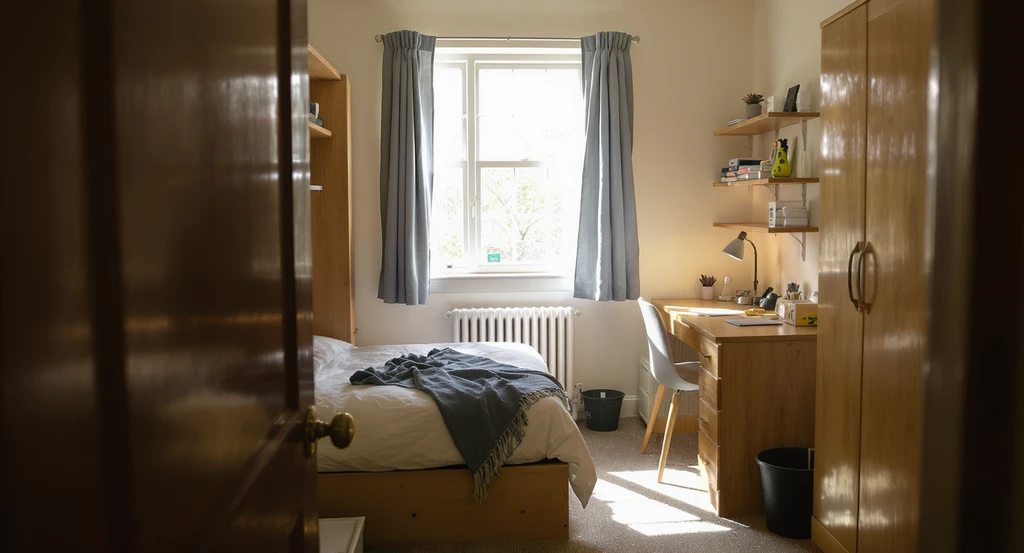
Knowing which dorm furniture can't be moved is essential for how to plan a small dorm room layout and achieve the best furniture arrangement for tiny dorms.
Dorm rooms come with a semi-permanent cast of characters: the built-in desk, the creaky wardrobe, the infamous Twin XL bed, outlets, a radiator, and not much more. You can't move these, so they define your possibilities. Trying to fight the room (or fantasize about swapping out pieces) just leads to frustration.
Set your expectations by walking the room, tape measure in hand. Take stock of every closet door swing, every outlet, every heater or vent. According to our guide to functional dorm design, this is your framework, not your enemy. Planning around these fixed features saves tons of headaches when you actually start placing your essentials.
-
2. Measure, Map, and Then Plan (Not the Other Way Around)
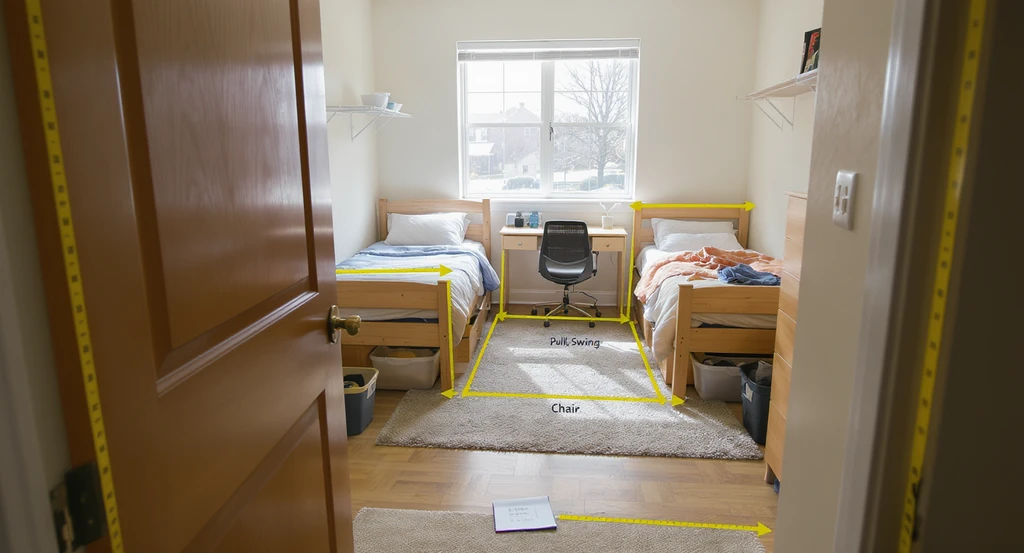
How to plan a small dorm room layout: Before shopping, measure the real space for best furniture arrangement and creative storage solutions. Shared dorm room layout tips, such as marking dimensions and using vertical space, maximize comfort and efficiency.
It’s way too easy to buy storage bins or a fuzzy rug based on a viral haul, then discover neither fits when you see the room IRL. Before anything goes in your cart, or even on your wishlist, get dimensions.
Campus websites usually list average room sizes. But if you get early access or photos, measure the real stuff: space between beds, under-bed clearance, door swings, how much space your desk chair actually needs. This habit, stressed in our budget dorm room tips guide, saves money and prevents headaches. Knowledge is power, and measuring tape is your (cheap) super tool.
-
3. Zones, Flow, and Paths: How to Make Small Feel Spacious
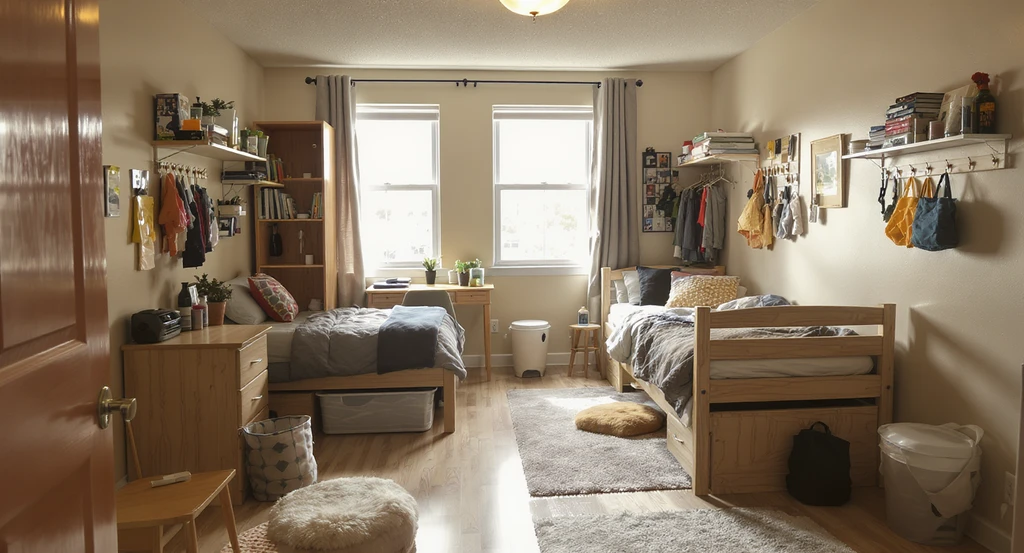
This realistic dorm room shows how to plan a small dorm room layout with the best furniture arrangement for tiny dorms, emphasizing creative storage solutions, smart shared dorm room layout tips for roommates, and using vertical space without clutter.
Divide your room mentally into the essentials: sleep, study, storage, and a mini chill spot. Clutter happens when you mix these together or fill every inch just because you can.
Paths matter more than you think. One simple priority: can you walk from the door to your bed and closet without tripping over laundry or stepping on a backpack? Leave space at the desk for your chair to move, resist blocking outlets or vents, and try not to turn your laundry basket into an obstacle course.
Placing beds along opposite walls (or head-to-head, back-to-back) creates some privacy if sharing. If you’re solo, you get to experiment, maybe one desk is your entertainment zone, the other your study hub. Need inspiration for smart roommate setups? Check out our full roommate dorm room guide
. -
4. Go Vertical: Storage That Doesn’t Eat Your Floor
When floor space is measured in sneakers (not feet), going up is your secret weapon. Over-the-door hooks, desk hutches, hanging organizers, vertical shelf units (if allowed), all work overtime to keep walkways open. Raising your bed, with permission, unlocks a cargo hold for out-of-season clothes, a laundry basket, or even a mini fridge.
It’s not about stacking everything to the rafters; it’s about using the height you already have. And always check your school’s housing rules before investing in risers or stacking shelves, so you don’t end up with stuff you can’t use.
-
5. Coordinating With Your Roommate = More Room for Everyone
A classic mistake: bringing two of everything. The best roommate setups start before move-in with a text or FaceTime to divide up the big stuff, like mini fridges, printers, or vacuums. Not only does this save money (a big theme in our intentional budget dorm article), it opens up precious floor space.
Coordinate essentials, agree on zones, and decide together about bigger buys, because nothing eats up space and peace like two coffee makers battling for desk real estate.
-
6. Why Most Decor Can Wait Until After Move-In
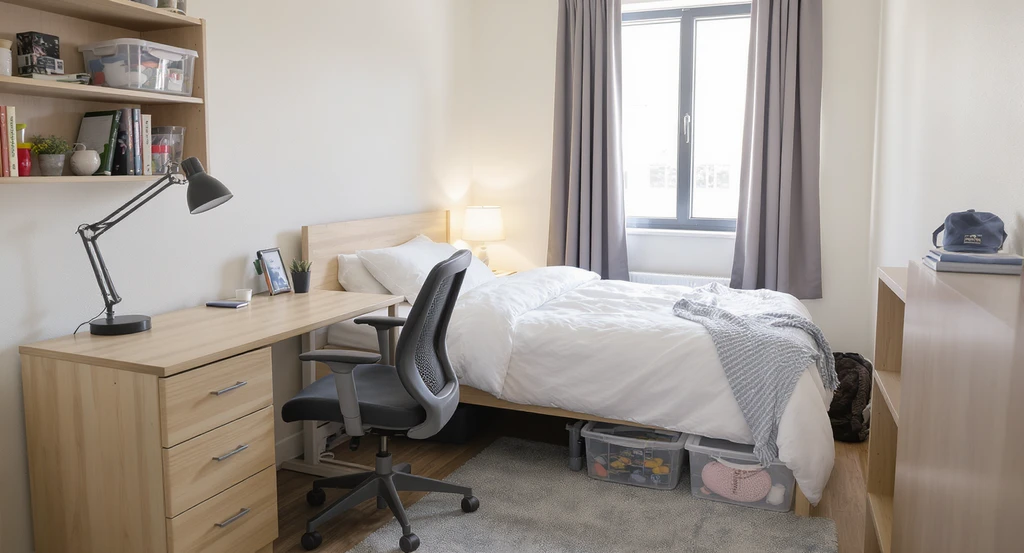
Plan a small dorm room layout by starting with only the best furniture arrangement and creative storage solutions—add decor after move-in for the ideal setup.
Here’s the honest truth: you don’t know what you’ll actually want (or have space for) until you’ve lived in your dorm for a few days. Buy your top bedding, storage bins, a comfy desk chair, and reliable lighting first. Hold off on decorative pillows, rugs, or accent furniture until you see how much space is left.
Visualization Scenario
Picture a nearly empty college dorm room: bright sunlight, a measuring tape on the floor, the built-in desk and wardrobe waiting. Two roommates scroll through dormtok on their phones, previewing different layouts, lofted beds, side-by-side desks, and storage bins fitting perfectly under a raised frame. They settle on a setup that leaves open floorspace, clear walking paths, and just enough room for a cozy lounge chair (after move-in). Moving in is quick and calm, without any big shopping regrets.
The DormTok Takeaway: Layout Is the Real Glow-Up
Here’s the secret: the best dorms aren’t the fanciest or the most aesthetic, they’re the ones that actually make college life easier. Start with what you can’t move. Map zones for sleep, study, and storage. Coordinate with your roommate. Use vertical storage, and be flexible about what you buy before versus after move-in. Inspiration is fun, but test your ideas with a tool like dormtok and keep your plans realistic, for your room and your budget.
When you connect your vision with real dimensions, layout becomes your favorite ‘dorm essential’, and you set yourself up for a smooth start, less stress, and an environment that actually works for you.